

A 3D stone engraving machines is an automated processing system that integrates computer numerical control (CNC) technology, 3D modeling, servo-driven motion, and precision cutting. It is capable of performing complex shaping tasks-such as 3D relief carving, contoured surface modeling, and openwork (fretwork) engraving-on a variety of substrates, including wood, stone, and acrylic. The spindle serves as the core execution unit of the machine; it is responsible for holding various cutting tools, such as drill bits, end mills, and profile cutters.
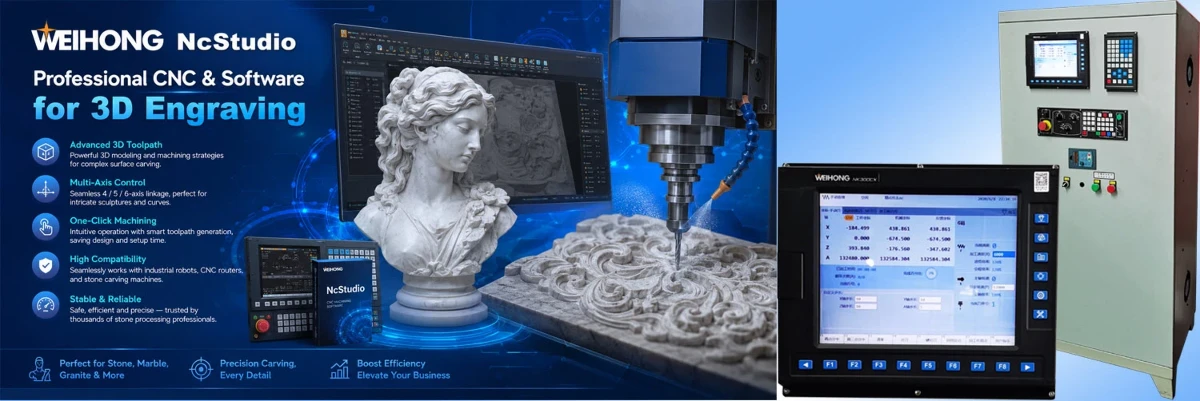
What Is a 3D stone engraving machines Spindle?
The spindle is the primary power output and cutting execution component of a 3D stone engraving machines. Its main function is to secure the cutting tool and drive it at high rotational speeds. Working in tandem with the machine's three-axis motion system, it facilitates material removal and shaping. As such, the spindle is a critical component that determines engraving precision, processing efficiency, and the quality of the finished product.
Basic Operating Principle
The entire machining process is orchestrated by the machine's CNC system, which acts as the "brain" of the equipment. Operators first create a 3D model using specialized design software and generate a standard toolpath file, which is then sent to the machine's control unit. The control unit precisely drives the X, Y, and Z-axis servo mechanisms, positioning and advancing the spindle assembly along a pre-programmed trajectory while simultaneously regulating the feed rate.
The spindle contains a dedicated internal drive motor that generates torque to rotate the clamped cutting tool at high speeds. Spindle speed is a key process parameter that must be adjusted based on the material properties and the desired outcome. For softer materials like wood, lower to medium speeds are typically used to prevent edge chipping or fraying. Conversely, when processing harder materials like stone, higher rotational speeds are required to ensure a smooth, clean cut and minimize the risk of cracking or fractures.
The Cutting Process
As the spindle drives the cutting tool at high speed, the tool continuously removes material from the workpiece, following the specific path pre-planned by the CNC program. Take the machining of a circular contour as an example: the control system guides the spindle assembly along a circular interpolation path, while the cutting tool rotates at high speed to perform the contour cut.
The geometry of a cutting tool's edge directly determines its machining capabilities, with different tools serving specific functions. Roughing tools feature large chip-clearing spaces, allowing for the rapid removal of excess material and significantly boosting rough-machining efficiency. Finishing tools, by contrast, have refined cutting edges that ensure stable movement; they are ideal for carving intricate details-such as relief patterns or complex curved surfaces-resulting in clear, smooth, and precise finished work.
Spindle Cooling System
During high-speed machining, continuous friction between the tool and the workpiece generates significant heat. If this heat accumulates, it accelerates tool wear, causes the spindle bearings to overheat and lose precision, and-in extreme cases-can even burn out the spindle entirely. Consequently, most CNC engraving spindles are equipped with dedicated cooling systems, categorized primarily into air-cooled and water-cooled types.
Air-cooled spindles utilize an integrated fan to generate convective airflow that dissipates heat. This design is simple, easy to install, and requires minimal maintenance, making it well-suited for intermittent use or light-to-medium-duty operations. Water-cooled spindles, meanwhile, use a pump to circulate coolant through the spindle housing. This method offers far superior heat-exchange efficiency and more stable temperature control, making it the preferred choice for heavy-duty stone-cutting operations that require continuous, long-duration, and high-load performance.
Spindle Power
Spindle power represents the available cutting capacity. Higher power translates to greater torque, enabling deeper cuts and the ability to process harder materials, thereby raising the overall machining threshold. When selecting a spindle, the primary criteria should be the hardness and thickness of the materials you intend to process. For softer materials like foam or thin wooden boards, a low-to-medium-power spindle is generally sufficient; however, for stone-which is highly hard and presents significant cutting resistance-a high-power spindle is essential. The specialized engraving spindle for stone is a prime example. Optimized for the high-impact, high-heat conditions inherent in stone cutting, it features a high-power drive motor and a reliable cooling system, enabling consistent, stable performance in stone relief carving, line engraving, and cutting operations.
Daily Spindle Maintenance
Proper, routine maintenance is essential for extending the spindle's service life and ensuring consistent machining precision. The primary daily task is dust and debris removal: if dust or fragments from the cutting process accumulate in the spindle taper or the tool collet, they can compromise clamping accuracy-leading to misaligned engraving patterns or even damage to the spindle's precision mating surfaces. A soft-bristled brush combined with compressed air can be used for regular cleaning.
Spindle bearings are precision components that ensure smooth rotation; however, they are subject to gradual wear due to continuous high-speed operation and cutting impacts. During maintenance, regular inspections are necessary. If the spindle produces unusual noises or exhibits noticeable vibration during operation, it is highly likely that the bearings have worn out or failed. In such cases, the machine should be stopped immediately to replace the bearings, preventing further damage to the spindle assembly itself.
Conclusion
In summary, the spindle is the core component that enables a 3D stone engraving machines to perform cutting and shaping tasks. Its rotational speed, power, and cooling method collectively determine its suitability for specific machining applications. A thorough understanding of the spindle's operating logic and technical characteristics will help you select the right equipment, plan efficient machining processes, and perform effective daily maintenance-ultimately ensuring the consistent production of high-quality engraved workpieces.
If you are planning to select a 3D stone engraving machines for your facility, please feel free to reach out. Based on the materials you process, the required working area, and your specific technical requirements, we can recommend the ideal model and provide a customized solution tailored to your needs.